Monday, April 27, 2020

Big Picture Science for Apr 27, Skeptic Check: Covid Conspiracy


Big Picture Science - Skeptic Check: Covid Conspiracy

Nature abhors a vacuum, but conspiracy theorists love one. While we wait for scientists to nail down the how and why of the coronavirus, opportunists have jumped into the void, peddling DIY testing kits and fake COVID cures like colloidal silver. They’ve even cooked up full-blown conspiracy theories about a lab-grown virus. Find out why this crisis has dished up more than the usual share of misinformation and hucksterism, and how these interfere with our ability to navigate it safely.

Guests:
  • Whitney Phillips - Professor of communication and rhetorical studies at Syracuse University, and author of three books, most recently You Are Here: A Field Guide for Navigating Polluted Information
  • Joan Donovan - Research director at Harvard’s Shorenstein Center on Media, Politics and Public Policy

Download podcast at - http://bigpicturescience.org/episodes/skeptic-check-covid-conspiracy

You can listen to this and other episodes at http://bigpicturescience.org/, and be sure to check out Blog Picture Science, the companion blog to the radio show.

Monday, April 20, 2020

Big Picture Science for Apr 20, Treating the Virus


Big Picture Science - Treating the Virus

It’s not like waiting for Godot, because he never arrived.  A coronavirus vaccine will come.  But it is still months away.  Meanwhile, scientists are adding other weapons to our growing arsenal against this virus. The development of antibody tests, antibody cures, and antivirals offer hope that we can soon have the tools to battle those who’ve been sickened by the COVID-19 virus while we wait for the inoculation that will prevent it.

Guests:
  • Deepta Bhattacharya – Immunologist at the University of Arizona whose lab is making a coronavirus antibody test.
  • Mark Denison – Professor of pathology, microbiology, and immunology, Vanderbilt University School of Medicine

Download podcast at - http://bigpicturescience.org/episodes/treating-the-virus

You can listen to this and other episodes at http://bigpicturescience.org/, and be sure to check out Blog Picture Science, the companion blog to the radio show.

Sunday, April 12, 2020

Big Picture Science for Apr 13, The Other Living World


Big Picture Science - The Other Living World

Reason for hope is just one thing that ecologist Carl Safina can offer.  He understands why many of us turn to nature to find solace during this stressful time. Safina studies the challenges facing the ultimate survival of many species, but also gives a portrait of animals from their point of view. He describes how diverse animals such as sperm whales, bear cubs, macaws, and chickens deal with uncertainty, and assert their quirky individuality while learning to become part of a community. So is it possible for us to reconnect not just with humanity, but also with the other living world?

Guest:
Download podcast at - http://bigpicturescience.org/episodes/the-other-living-world

You can listen to this and other episodes at http://bigpicturescience.org/, and be sure to check out Blog Picture Science, the companion blog to the radio show.

Wednesday, April 08, 2020

Big Picture Science for Apr 06, Zombies, Bigfoot, and Max Brooks


Big Picture Science - Zombies, Bigfoot, and Max Brooks

What do a zombie attack and a viral pandemic have in common?  They are both frightening, mindless, and relentless in their assault.  And both require preparedness.   That’s why the author of “World War Z” – a story about a battle against zombies – lectures at West Point.

Max Brooks has also recorded a public service announcement with his celebrated father, Mel Brooks, touting the importance of social distancing during the coronavirus pandemic.  His newest novel portrays a different assailant: Bigfoot.

Whether our enemy is the undead, a hirsute forest dweller, or an invisible virus, panic won’t help us survive.  Find out what will.

Guest:

Download podcast at - http://bigpicturescience.org/episodes/zombies-bigfoot-and-max-brooks

You can listen to this and other episodes at http://bigpicturescience.org/, and be sure to check out Blog Picture Science, the companion blog to the radio show.

Tuesday, April 07, 2020

Big Picture Science for Mar 30, Let’s Take a Paws


Big Picture Science - Let’s Take a Paws

Humans aren’t the only animals stressed-out by social distancing.  Narwhals send out echolocation clicks to locate their buddies and ease their loneliness.  And a plant about to be chomped by a caterpillar knows that the world can be a scary place.

In this episode, from dogs to narwhals to plants, we put aside human-centric stories to find out how other living creatures map their world, deal with stress, and communicate.

Guests:

Download podcast at - http://bigpicturescience.org/episodes/lets-take-paws

You can listen to this and other episodes at http://bigpicturescience.org/, and be sure to check out Blog Picture Science, the companion blog to the radio show.

Monday, April 06, 2020

Big Picture Science for Mar 23, How Bad Does It Have to Get?


Big Picture Science - How Bad Does It Have to Get?

“Climate change at warp speed” is the way one scientist described the coronavirus outbreak.

In a show recorded before a live audience at the Seattle AAAS meeting, and co-presented with the BBC World Service, we discuss out how politics and psychology lead people to tune out inconvenient scientific findings even when the stakes are high – as well as what we can do about it.

Guests:


Download podcast at - http://bigpicturescience.org/episodes/how-bad-does-it-have-to-get

You can listen to this and other episodes at http://bigpicturescience.org/, and be sure to check out Blog Picture Science, the companion blog to the radio show.
Sunday, April 05, 2020

Big Picture Science for Mar 16, It's In Material


Big Picture Science - It's In Material

Repeat - Astronauts are made of the “right stuff,” but what about their spacesuits?   NASA’s pressurized and helmeted onesies are remarkable, but they need updating if we’re to boldly go into deep space.   Suiting up on Mars requires more manual flexibility, for example.  Find out what innovative materials might be used to reboot the suit.

Meanwhile, strange new materials are in the pipeline for use on terra firma: spider silk is kicking off the development of biological materials that are inspiring ultra-strong, economical, and entirely new fabrics.  And, while flesh-eating bacteria may seem like an unlikely ally in materials science, your doctor might reach for them one day.  The bacterium’s proteins are the inspiration for a medical molecular superglue.

Plus, an overview of more innovative materials to come, from those that are 3D printed to self-healing concrete.

Guests:

This repeat podcast was previously released on October 2, 2017

Download podcast at - http://bigpicturescience.org/episodes/its-in-material

You can listen to this and other episodes at http://bigpicturescience.org/, and be sure to check out Blog Picture Science, the companion blog to the radio show.

Sunday, March 08, 2020

Big Picture Science for Mar 09, Skeptic Check: Pandemic Fear


Big Picture Science - Skeptic Check: Pandemic Fear

Contagion aside, coronavirus is a powerful little virus.  It has prompted a global experiment in behavior modification: elbow bumps instead of handshakes, hand sanitizer and mask shortages, a gyrating stock market.

Pragmatism motivates our behavior toward the spread of this virus, but so do fear and panic. In 1918, amplified fear made the Spanish Flu pandemic more deadly.

Can we identify when we’re acting sensibly in the face of COVID-19, or when fear has hijacked our ability to think rationally and protect ourselves?

Guests:

You can listen to this and other episodes at http://bigpicturescience.org/, and be sure to check out Blog Picture Science, the companion blog to the radio show.

Big Picture Science for Mar 02, DecodeHer


Big Picture Science - DecodeHer

(Repeat) They were pioneers in their fields, yet their names are scarcely known – because they didn’t have a Y chromosome.  We examine the accomplishments of two women who pioneered code breaking and astronomy during the early years of the twentieth century and did so in the face of social opprobrium and a frequently hostile work environment.

Henrietta Leavitt measured the brightnesses of thousands of stars and discovered a way to gauge the distances to galaxies, a development that soon led to the concept of the Big Bang.

Elizabeth Friedman, originally hired to test whether William Shakespeare really wrote his plays, was soon establishing the science of code breaking, essential to success in the two world wars.

Also, the tech industry is overwhelmingly male.  Girls Who Code is an initiative to redress the balance by introducing girls to computer programming, and encouraging them to follow careers in tech.

Guests:

This repeat podcast was previously released on  04/01/2019

This podcast will be released this coming Monday at - http://bigpicturescience.org/

You can listen to this and other episodes at http://bigpicturescience.org/, and be sure to check out Blog Picture Science, the companion blog to the radio show.

Sunday, February 23, 2020

Big Picture Science for Feb 24, AI: Where Does it End?


Big Picture Science - AI: Where Does it End?

The benefits of artificial intelligence are manifest and manifold, but can we recognize the drawbacks … and avoid them in time?

In this episode, recorded before a live audience at the Seattle meeting of the American Association for the Advancement of Science, we discuss who is making the ethical decisions about how we use this powerful technology, and a proposal to create a Hippocratic Oath for AI researchers.

Guests:
  • Oren Etzioni - CEO of The Allen Institute for Artificial Intelligence
  • Mark Hill - Professor of computer sciences at the University of Wisconsin, Madison, and chair of the Computing Community Consortium

This podcast will be released this coming Monday at - http://bigpicturescience.org/

You can listen to this and other episodes at http://bigpicturescience.org/, and be sure to check out Blog Picture Science, the companion blog to the radio show.

Sunday, February 16, 2020

Big Picture Science for Feb 17, Climate Changed


Big Picture Science - Climate Changed

Have you adapted to the changing climate? Rising waters, more destructive wildfires, record-breaking heatwaves. Scientists have long predicted these events, but reporting on climate change has moved from prediction to description. There’s no time for dwelling on “we should haves.” Communities and organizations are being forced to adapt. Find out what that means, the role of the new “resilience officers,” and the unique response of Native American cultures. Plus, is the coronavirus outbreak made worse by climate change?

Guests:
  • James Randerson – Professor of Earth Science, University of California, Irvine
  • Victor Rodriguez – PhD student, Carnegie Mellon University, Department of Engineering and Public Policy
  • Kyle Whyte – Professor in the Departments of Philosophy and Community Sustainability, and tribal member of the Citizen Potawatomi Nation
  • Tracey Goldstein – Professor in the Department of Pathology, Immunology, and Microbiology, University of California, Davis

Download podcast at - http://bigpicturescience.org/episodes/climate-changed

You can listen to this and other episodes at http://bigpicturescience.org/, and be sure to check out Blog Picture Science, the companion blog to the radio show.

Sunday, February 09, 2020

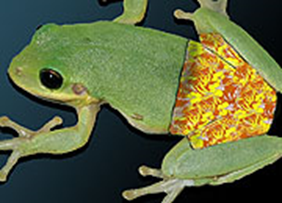
Big Picture Science for Feb 10, Frogs' Pants


Big Picture Science - Frogs' Pants

It’s one of the most bizarre biological experiments ever. In the 18th century, a scientist fitted a pair of tailor-made briefs on a male frog to determine the animal’s contribution to reproduction.  The process of gestation was a mystery and scientists had some odd-ball theories.

Today, a 5th grader can tell you how babies are made, but we still don’t know exactly what life is.  In our quest to understand, we’re still at the frogs’ pants stage.

Find out why conception took centuries to figure out.  Also, why the 1970s Viking experiments, specifically designed to detect life on Mars, couldn’t give us a definitive answer.  Plus, can knowing where life isn’t help define what it is?  Take a tour of the world’s barren places.

Guests:

This repeat podcast was previously released on July 10, 2017

This podcast will be released this coming Monday at - http://bigpicturescience.org/

You can listen to this and other episodes at http://bigpicturescience.org/, and be sure to check out Blog Picture Science, the companion blog to the radio show.
Monday, February 03, 2020

Big Picture Science for Feb 03, Skeptic Check: Science Denial


Big Picture Science - Skeptic Check: Science Denial

(Repeat) Climate change isn’t happening.  Vaccines make you sick.  When it comes to threats to public or environmental health, a surprisingly large fraction of the population still denies the consensus of scientific evidence.  But it’s not the first time – many people long resisted the evidentiary link between HIV and AIDS and smoking with lung cancer.

There’s a sense that science denialism is on the rise.  It prompted a gathering of scientists and historians in New York City to discuss the problem, which included a debate on the usefulness of the word “denial” itself.  Big Picture Science was there. We report from the Science Denial symposium held jointly by the New York Academy of Sciences and Rutgers Global Health Institute.

Find out why so many people dig in their heels and distrust scientific findings.  Plus, the techniques wielded by special interest groups to dispute some inconvenient truths.  We also hear how simply stating more facts may be the wrong approach to combating scientific resistance.

Guests:

This repeat podcast was previously released on 11/12/2018

Download podcast at - http://bigpicturescience.org/episodes/skeptic-check-science-denial

You can listen to this and other episodes at http://bigpicturescience.org/, and be sure to check out Blog Picture Science, the companion blog to the radio show.

Sunday, January 26, 2020

Big Picture Science for Jan 27, A Twist of Slime


Big Picture Science - A Twist of Slime

Your daily mucus output is most impressive.  Teaspoons or measuring cups can’t capture its entire volume.  Find out how much your body churns out and why you can’t live without the viscous stuff.  But slime in general is remarkable.  Whether coating the bellies of slithery creatures, sleeking the surface of aquatic plants, or dripping from your nose, its protective qualities make it one of the great inventions of biology. Join us as we venture to the land of ooze!

Guests:

Download podcast at - http://bigpicturescience.org/episodes/a-twist-of-slime

You can listen to this and other episodes at http://bigpicturescience.org/, and be sure to check out Blog Picture Science, the companion blog to the radio show.

Sunday, January 19, 2020

Big Picture Science for Jan 20, The Ears Have It


Big Picture Science - The Ears Have It

What’s the difference between a bird call and the sound of a pile driver?  Not much, when you’re close to the loudest bird ever.  Find out when it pays to be noisy and when noise can worsen your health.  Just about everyone eventually suffers some hearing loss, but that’s not merely aging.  It’s an ailment we inflict on ourselves.  Hear how a team in New York City has put sensors throughout the city to catalog noise sources, hoping to tame the tumult.

And can underwater speakers blasting the sounds of a healthy reef bring life back to dead patches of the Great Barrier Reef?

Guests:
  • Mark Cartwright – Research Assistant Professor at New York University’s Department of Computer Science and Engineering
  • Charles Mydlarz – Research Assistant Professor at New York University’s Center for Urban Science and Progress (CUSP) and the Music and Audio Research Lab (MARL)
  • David Owen – Staff writer at The New Yorker, and author of Volume Control: Hearing in a Deafening World
  • Jeff Podos – Professor in the Department of Biology, University of Massachusetts, Amherst
  • Steve Simpson – Professor of Marine Biology and Global Change, Exeter University, U.K.

Download podcast at - http://bigpicturescience.org/episodes/the-ears-have-it

You can listen to this and other episodes at http://bigpicturescience.org/, and be sure to check out Blog Picture Science, the companion blog to the radio show.